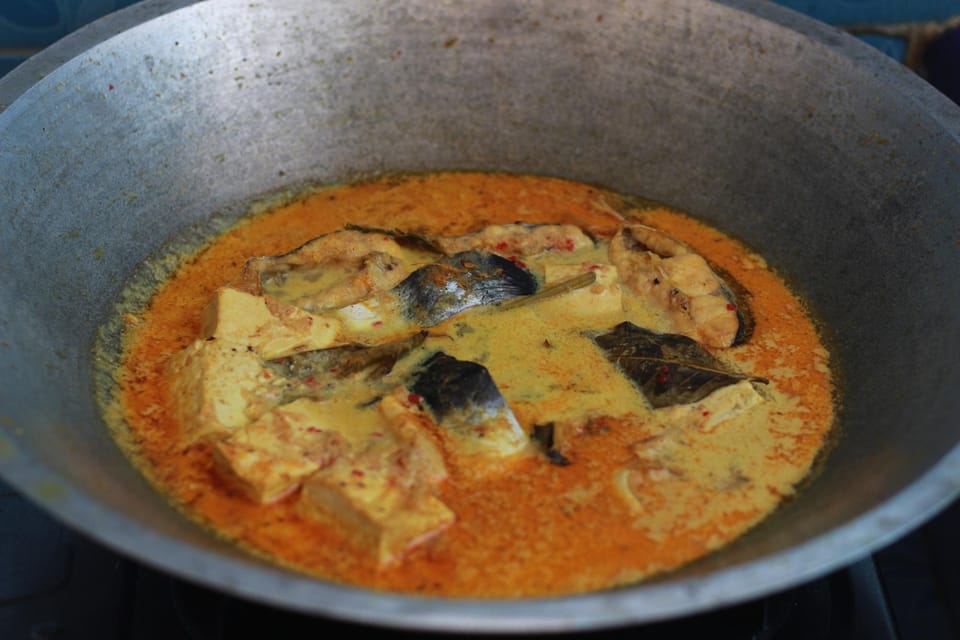
Embarking on a culinary journey through Indonesia's vibrant flavors, I stumbled upon a dish that captures the essence of its tropical waters: Coral Reef Fish Curry. This recipe is a tapestry of my experiences, woven with the rich spices and fresh ingredients that define Indonesian cuisine. I remember my initial attempt, where I was heavy-handed with the turmeric, resulting in a curry that was more bitter than aromatic. Through trial and error, I've refined this recipe to strike a delicate balance between the robust spices and the delicate sweetness of the fish, creating a harmonious dish that's become a cherished favorite in my kitchen.
Inspired by the traditional 'Gulai Ikan,' this curry pays homage to the local fishermen's catch, simmered in a sauce that's both comforting and exotic. I recall the first time I used store-bought curry paste, only to realize that nothing compares to the depth of flavor achieved with freshly ground spices. It's a lesson in the importance of authenticity and the magic that happens when you take the time to build flavors from scratch. Let's dive into this Indonesian Coral Reef Fish Curry recipe, a celebration of the sea's bounty, infused with the warmth of homemade spice blends.
Ingredients
For the spice paste
- Shallots — 6, peeled and roughly chopped
- Garlic cloves — 4, peeled
- Ginger — 2-inch piece, peeled and sliced
- Galangal — 2-inch piece, peeled and sliced (if unavailable, use extra ginger)
- Lemongrass — 2 stalks, tough outer layers removed, tender parts finely chopped
- Dried red chilies — 5, deseeded and soaked in warm water to soften
- Ground turmeric — 1 tsp
- Ground coriander — 2 tsp
- Ground cumin — 1 tsp
For the curry
- Coral reef fish (like snapper or grouper) — 1 lbs, filleted and cut into 2-inch pieces
- Coconut oil — 3 tbsp
- Kaffir lime leaves — 6, torn
- Coconut milk — 2 cups
- Tamarind paste — 1 tbsp, dissolved in 1/4 cup warm water
- Palm sugar — 1 tbsp, grated (or substitute with brown sugar)
- Fish sauce — 2 tbsp
- Thai basil leaves — a handful, for garnish
- Salt — to taste
Instructions
- Begin by preparing the spice paste. In a food processor, combine the shallots, garlic, ginger, galangal, lemongrass, softened dried red chilies, turmeric, coriander, and cumin. Blitz to a smooth paste, adding a little water if necessary. The first time I made this paste, I used a blender, which didn't quite achieve the fine texture I was after. A food processor, or better yet, a traditional mortar and pestle, will give you the consistency that's key to releasing the oils and aromas from the spices.
- Heat the coconut oil in a large skillet over medium heat. Add the spice paste and kaffir lime leaves, sautéing until fragrant, about 3-4 minutes. It's important not to rush this step; cooking the paste slowly allows the flavors to develop and mellow, preventing any raw spice taste in the final dish.
- Gently pour in the coconut milk, stirring to combine with the spice paste. Bring the mixture to a gentle simmer, then add the tamarind water, palm sugar, and fish sauce. I've learned that the tamarind's tanginess and the palm sugar's caramel notes are what give this curry its distinctive sweet and sour profile, so don't be tempted to omit them.
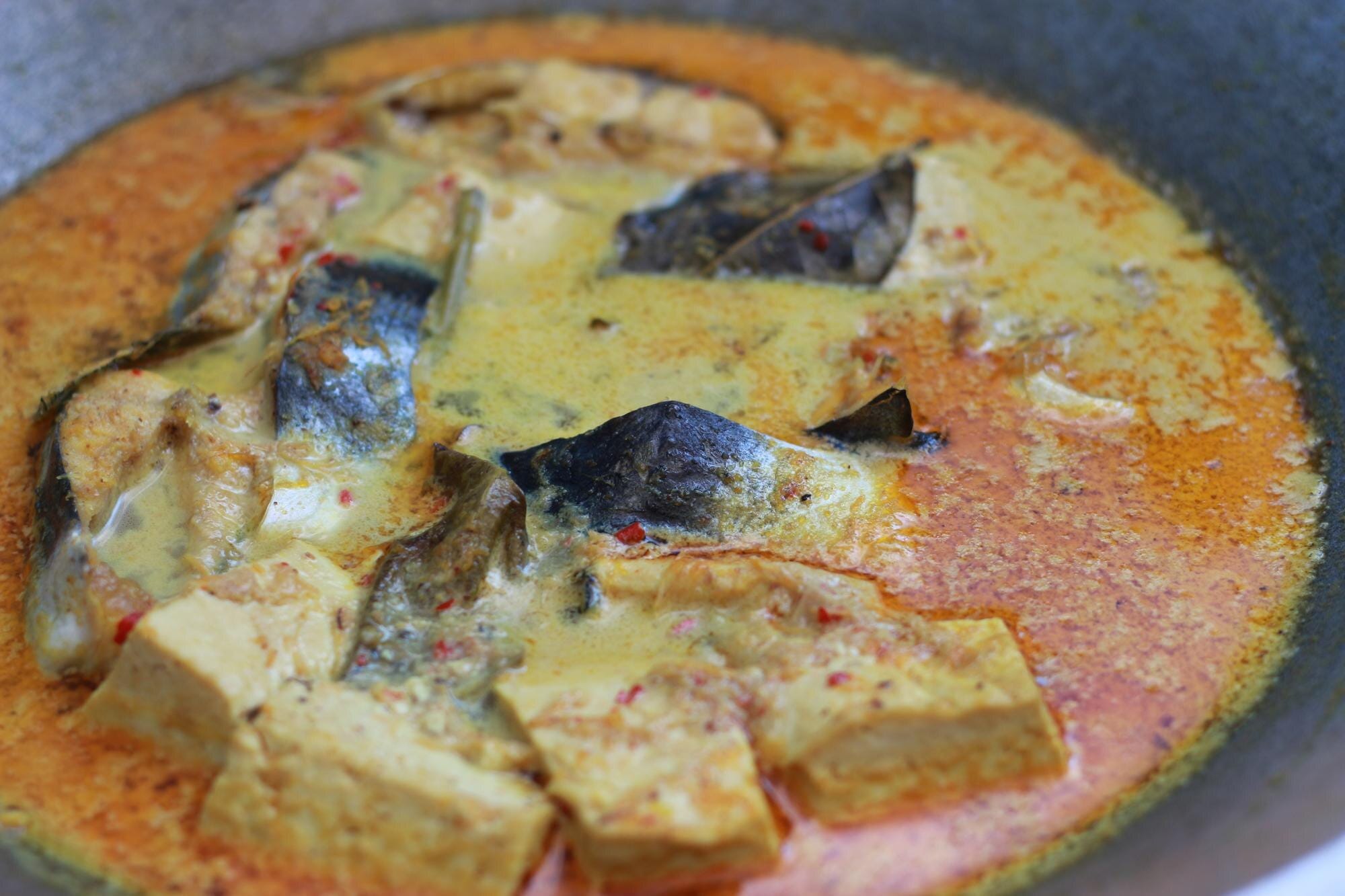
- Add the fish pieces to the skillet, spooning the sauce over them to ensure they're well-coated. Season with salt to taste. Cover and simmer for about 10 minutes, or until the fish is cooked through. It's crucial not to overcook the fish; you want it to be tender and flaky, not tough. I remember the disappointment of overcooked fish in my early attempts, which taught me to keep a watchful eye and test for doneness with a fork.
- Once the fish is cooked, remove from heat and let the curry sit for a few minutes. This resting period allows the flavors to meld and the fish to absorb the sauce's richness. I've found that this brief pause makes all the difference in achieving a harmonious blend of flavors.
- Just before serving, sprinkle the curry with fresh Thai basil leaves. The herb's anise-like aroma adds a final layer of complexity to the dish. In my first few servings, I used regular basil, which was nice but lacked the authentic touch that Thai basil brings to the table.
Substitutions
- Coconut oil — If coconut oil is not available, you can use a neutral oil like canola or vegetable oil. The flavor will be slightly different, but it will still yield a delicious curry.
- Kaffir lime leaves — These can be hard to find, but lime zest is a good alternative. Use the zest of one lime to substitute for the leaves, adding it with the coconut milk for a similar citrusy note.
Variations
- Vegetarian — For a plant-based version, substitute the fish with tofu and add vegetables like bell peppers and zucchini. Adjust the cooking time accordingly, as tofu and vegetables will not require as much time to cook as fish.
- Heat level — If you prefer a spicier curry, keep the seeds in the dried red chilies or add a couple of fresh Thai chilies to the spice paste. The heat can be exhilarating and adds another dimension to the dish.
Dietary Restrictions
- Gluten-free — This recipe is naturally gluten-free, but always check your fish sauce to make sure it doesn't contain any gluten-containing additives.
Equipment
- Food processor or mortar and pestle
- Large skillet or wok
- Measuring cups and spoons
- Wooden spoon or spatula
Storage and Reheating
- Store any leftover curry in an airtight container in the refrigerator for up to 3 days. The flavors will continue to develop, often resulting in an even more flavorful dish the next day.
- To reheat, gently warm the curry over low heat on the stove, adding a splash of water if needed to loosen the sauce. Avoid microwaving, as it can overcook the fish and affect the texture.
Pro Tips
- Quality of fish — Use the freshest fish you can find. Fresh fish not only tastes better but also holds up well in the curry without falling apart.
- Spice paste texture — Take the time to grind your spice paste as finely as possible. A smooth paste ensures that the flavors are evenly distributed throughout the curry.
- Simmering — Always simmer the curry gently. Boiling it vigorously can cause the coconut milk to separate and the fish to become tough.